
Why do we have so many issues in the BMS industry (hardware design)?
Every BMS project starts with a design, but engineers often have less time to focus on the details that prevent problems later. In this video, I’ll discuss how better BMS design, from sensor positioning and network loading to control panel design, can improve installation, commissioning, system performance, and overall project delivery.
I also touch on the idea that we are installing BMS systems based on a design driven by a sales points list, which was developed from an incorrect mechanical specification.
BMS Training
Our courses build on the product training provided by BMS companies to develop engineers into professionals who justify repeat work, earn higher fees, and drive business growth.
Self-paced online training courses.
Video, audio and text lessons.
Done-for-you Microsoft Word, Excel, and Visio design templates.
One-off payment for individual courses.
Lifetime access (for as long as the training business exists).

Bryce Anderson
For the first 15 years of my career (1998-2013), I worked for BMS companies (2 years in South Africa, 9 years in London, and 4 years in Australia). For the next +10 years (from 2014 onwards), I have worked as a BMS specialist consultant. I originally studied electronic engineering, specialising in process instrumentation and control.
In my consulting business (80% of my working week), I develop BMS specifications, review BMS contractor technical submissions, witness completed projects, etc. I also project manage the projects I design.
This puts me in a unique situation where I have visibility into what everyone is doing. The experience I share in training courses is made up of my own personal 15 years designing BMS systems, writing software code, commissioning, service and project management (across 3 different regions), plus the best parts of what the industry is currently providing through BMS specialist consulting.
This exposure to the wider industry allows me to provide customised training courses that not only teach the technical side of BMS but also address current real-world issues and constraints in the industry.
I am not just teaching you what I learned, but the best of what everyone else is doing.

Discover how better BMS design can improve project delivery and system performance. Learn why detailed planning, dedicated design resources, and smarter design decisions can dramatically reduce issues and save money.

Learn how BMS engineers can take control of their workload by forecasting project hours, identifying workload peaks, and giving managers the information they need to plan resources effectively.

Learn how to optimise BMS warm-up mode by avoiding two common control strategy mistakes. Improve heating performance and reduce energy waste.

Why does the lowest BMS tender keep winning? Learn why price often becomes the deciding factor and discover practical ways to differentiate your BMS company, win more tenders, and compete on value instead of the lowest price.

Many BMS companies struggle to deliver consistent project quality because success depends on individual employees. Learn how standardized processes and quality control systems can help build a stronger, more consistent BMS business.
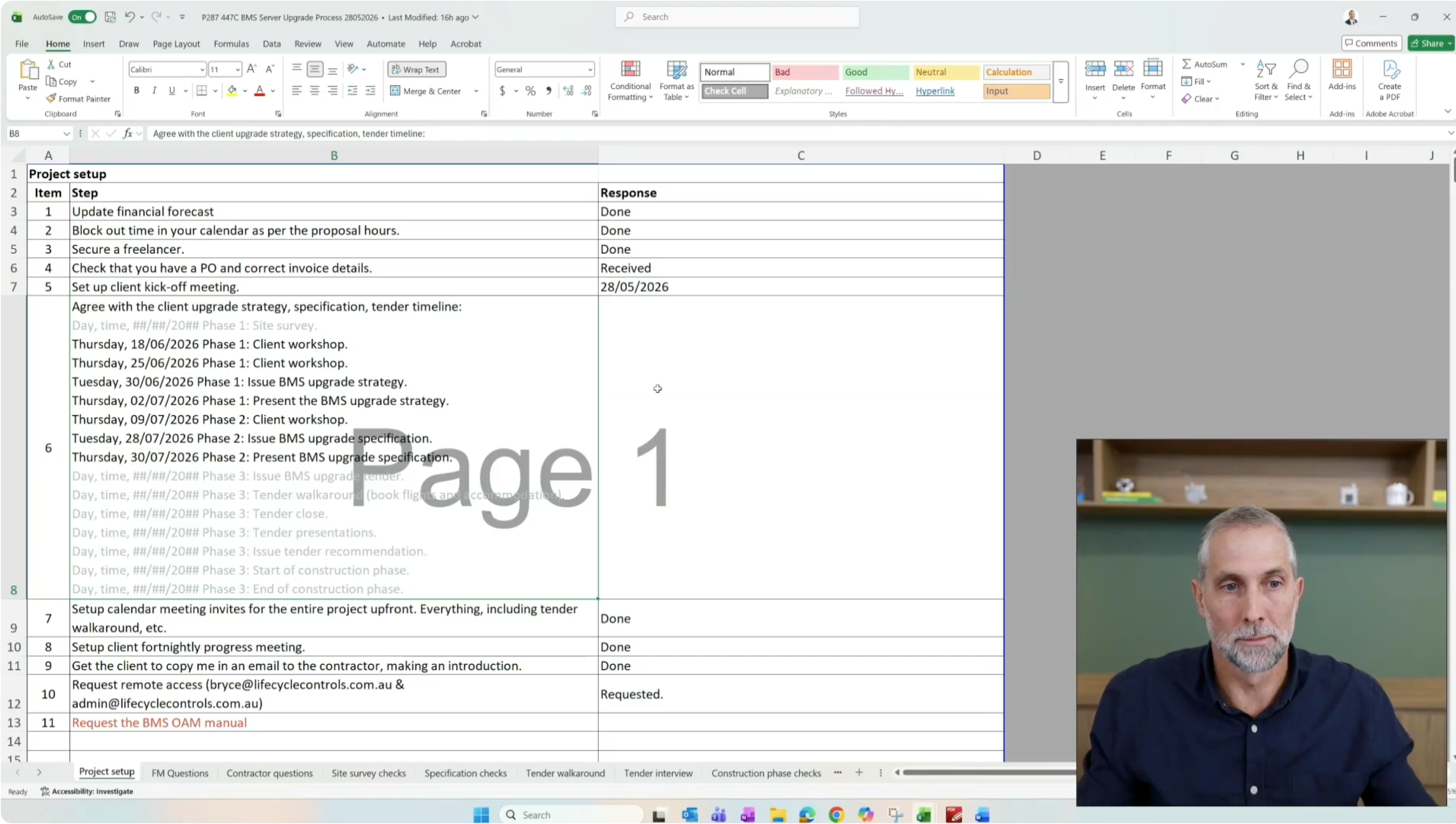
Every BMS company claims to be the best, but clients want proof. Learn how demonstrating your processes, systems, and expertise can help you stand out in BMS tender interviews and win more projects.

Every BMS engineer says they're experienced, but employers want proof. Learn how to stand out in BMS job interviews, demonstrate your expertise, and secure your next engineering or project management role.
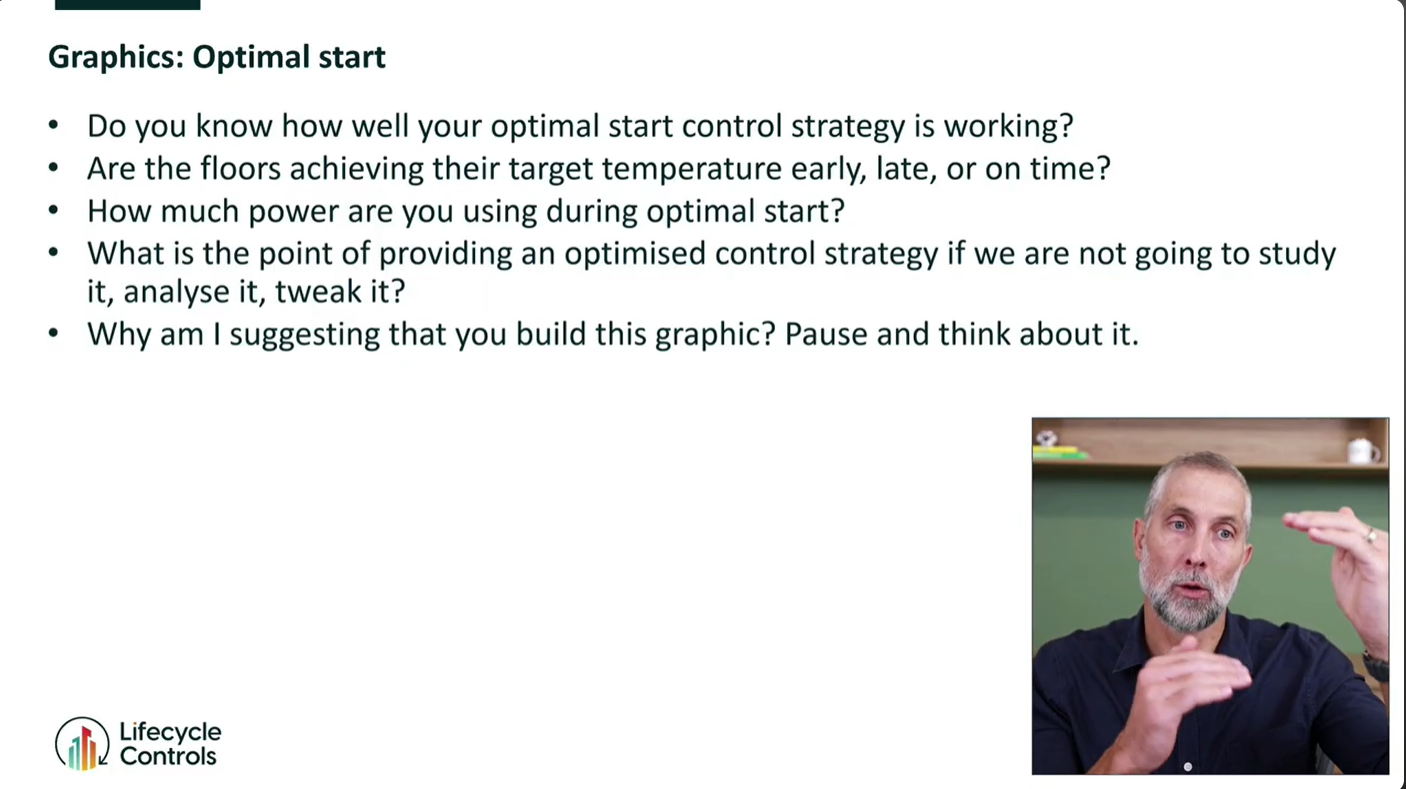
Many BMS companies implement optimal start strategies but rarely check if they’re truly working. Floors might not hit setpoints on time, and energy use is often overlooked. A dedicated optimal start graphic is essential; it lets you tune the system, balance comfort with efficiency, and prove value to the building owner. Without it, optimisation is just “trust us,” not measurable results.

Planned Maintenance Schedules go beyond annual checks. They provide structure, accountability, and clear communication showing clients exactly what’s being done and when. They help justify your fees, demonstrate professionalism, and turn routine maintenance into a long-term value partnership.

Measurement and Verification can be repurposed for more than just proving the savings to your client and justifying repeat work (optimisation projects).

Measurement and Verification can be repurposed for more than just proving the savings to your client and justifying repeat work (optimisation projects).

Understand why your customers do not approve important fee proposals and build a pipeline of service project work.

Where does the BMS/BAS fit in a world of technology? Where will the BMS/BAS be in 10 years?
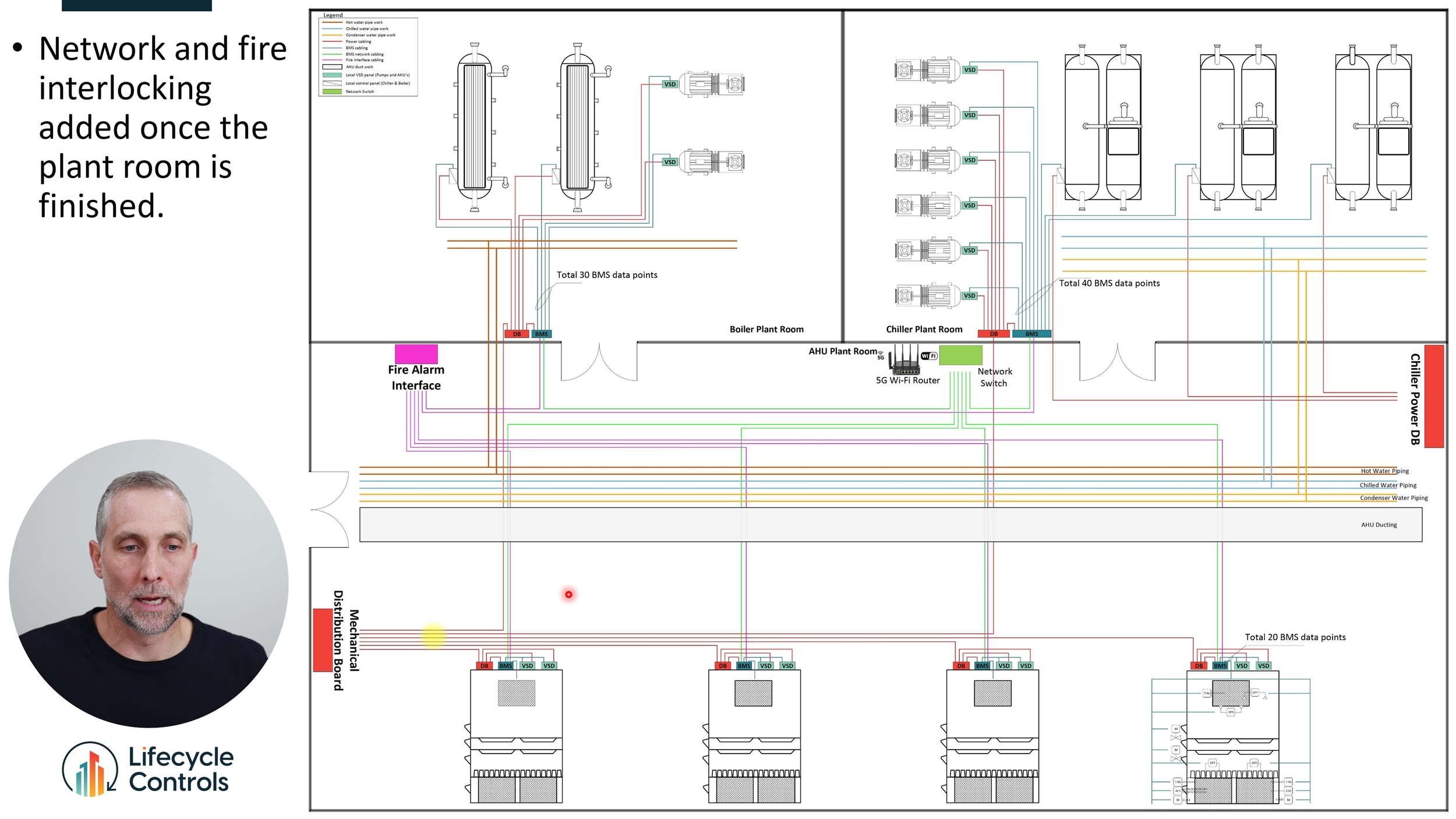
We are building buildings faster than ever before, but we haven’t changed how we design and install the BMS/BAS. To keep up we need to completely change how we design and install BMS/BAS systems.

Some technology companies will market their product as opening up the lock-in from the BMS and the BMS contractor. That may not be quite right.

People don’t want to work like they have been for the past 100 years. People want more than just work-life balance. They want the flexibility to work where they want and when they want.

Who is responsible for your continuous professional development? Your employer? You? Watch this video to find out.

The Chiller Management System (CMS) visualisation and analysis manual provides a resource for engineers that want to provide best-in-class chiller management system visualisation and analysis.


There are millions of buildings around the world that have the incorrect outside air being drawn in from the AHUs.


Graphics are the easiest thing to enhance to impress our customers. But, we continue to deliver the most simple graphics.

When we want to save energy, we often start with the major systems. E.g., the chilled water system. But, there are a lot of small changes that can be made, which can often be done during BMS service time.

BMS companies are not training their engineers and managers in advanced concepts. If they are not going to do it, then you should consider investing in your own career.

Like everything, there are pros and cons that need to be considered when you have a multi-vendor BMS.


We have been following the same rule for over 30 years. Is it time to reconsider how we look at our serial sub-network designs?

They were here, and now they are not. I thought I’d sit down and try to work this one out as no one has given me a good answer yet.

There are a few basics that I feel have gotten lost over the years. If you are a BMS engineer and you submit BMS technical submissions for review, then you should watch this video.